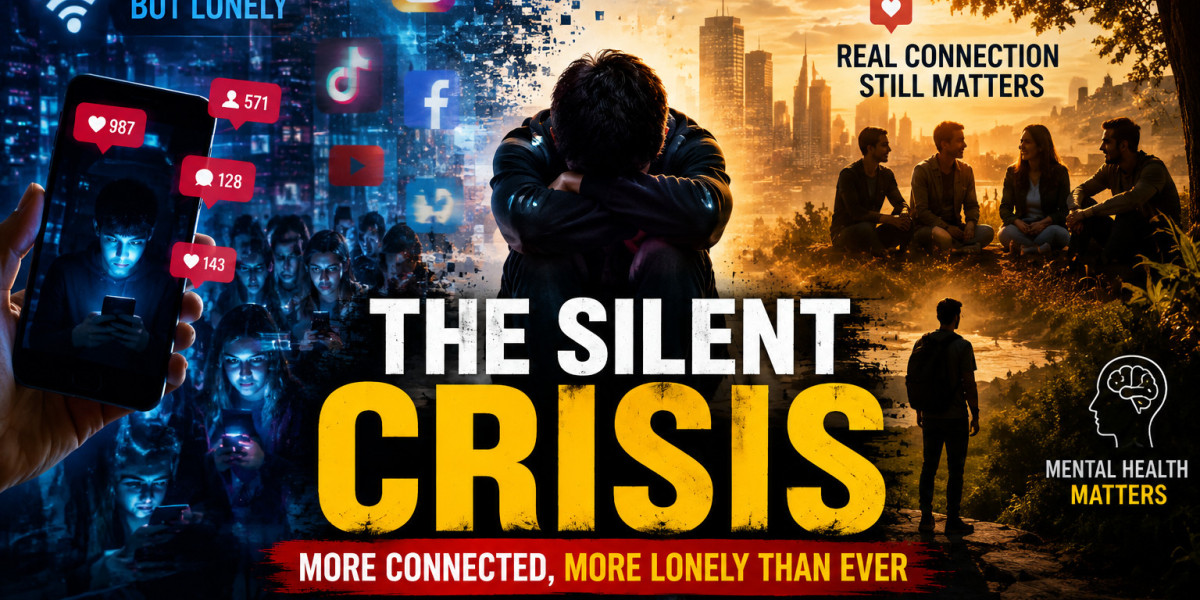

We are living in the most connected era in human history.
Millions of people communicate instantly across the world. Social media never sleeps. Notifications constantly demand attention. We can video call anyone, anywhere, at any time.
Yet despite all this connection, something strange is happening.
People are feeling more alone than ever before.
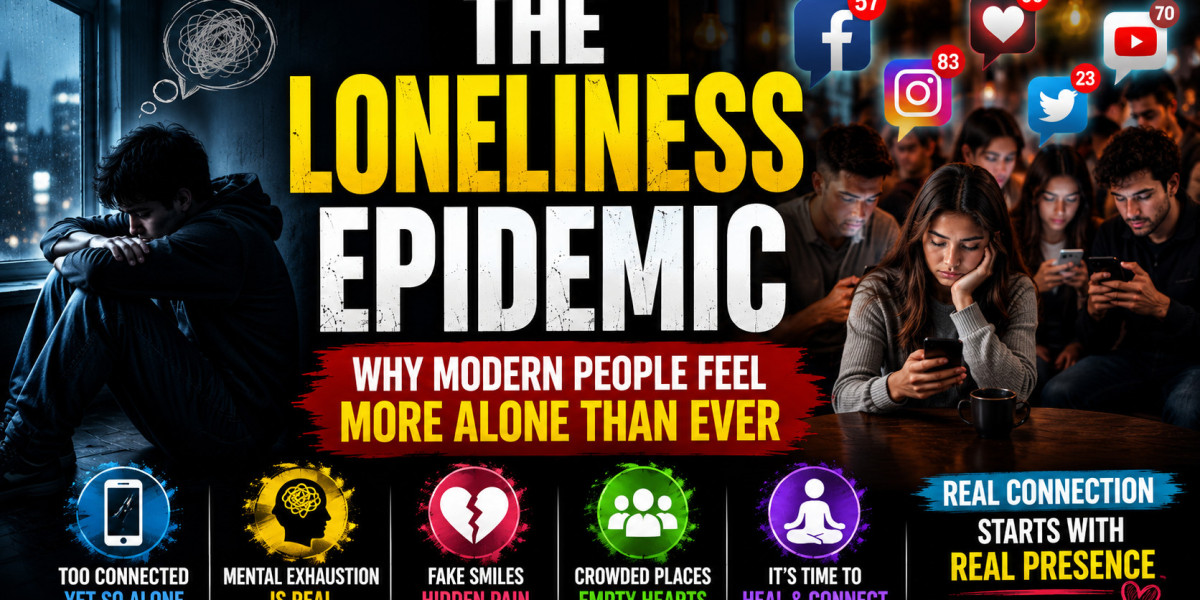
Welcome to the modern loneliness epidemic.
Connected Everywhere, Understood Nowhere
Today, many people have:
Hundreds of followers
Endless online conversations
Constant entertainment
Digital communities
But very few real emotional connections.
Many smile online while silently struggling in real life.
People post highlights, achievements, vacations, and perfect moments while hiding stress, anxiety, emptiness, and emotional exhaustion behind screens.
The digital world made us visible.
But not necessarily understood.
Social Media Changed Human Relationships
Social media promised connection.
Instead, it often created comparison.
People constantly compare their lives to carefully edited versions of others:
Better lifestyles
Better relationships
More money
More success
More happiness
Over time, this creates emotional pressure.
Many begin feeling:
Inadequate
Left behind
Emotionally disconnected
Mentally exhausted
The result is a strange paradox:
The more connected society becomes online, the more isolated many people feel inside.
The Rise of Fake Interaction
Modern communication has become fast, short, and superficial.
Quick likes
Short comments
Temporary attention
Endless scrolling
Real conversations are disappearing.
People spend hours online yet rarely experience deep emotional presence.
Many friendships now survive through reactions and emojis instead of genuine human connection.
And while technology grows smarter, emotional intimacy often grows weaker.
Hustle Culture Is Quietly Draining People
Modern society glorifies constant productivity.
People are told to:
Work harder
Earn more
Build faster
Stay busy
Never slow down
The result?
Many people are becoming emotionally burned out.
Work consumes time.
Phones consume attention.
Stress consumes peace.
And slowly, relationships become secondary.
People are physically surrounded by others while emotionally distant from everyone.
Why Loneliness Feels Different Today
Modern loneliness is not always about being physically alone.
Sometimes it means:
Feeling emotionally unseen
Feeling disconnected in crowded spaces
Having nobody to speak honestly with
Smiling publicly while struggling privately
This type of loneliness is dangerous because it often remains invisible.
Many people silently suffer while appearing completely fine online.
The Mental Health Impact
Loneliness affects more than emotions.
It can influence:
Anxiety
Depression
Motivation
Confidence
Sleep
Overall mental health
Humans are deeply social beings.
Real connection is not a luxury.
It is a psychological need.
The Digital World Is Replacing Real Moments
Look around in public spaces:
Friends sit together while staring at phones
Families eat without conversation
Couples scroll endlessly beside each other
Technology became part of life.
But for many, it also became an escape from real emotional vulnerability.
People are constantly consuming content while slowly disconnecting from themselves and others.
Can This Epidemic Be Reversed?
Yes, but it requires intentional change.
People may need to:
Spend less time seeking validation online
Build deeper real-world relationships
Have honest conversations
Prioritize mental health
Create meaningful human experiences
Slow down from nonstop digital stimulation
Real connection requires presence.
And presence has become rare.
Final Thoughts
The loneliness epidemic is one of the biggest emotional challenges of modern society.
Not because people are physically isolated.
But because many are emotionally disconnected in a world full of noise.
Technology gave humanity incredible power.
But it also created a generation constantly online and quietly exhausted.
The solution may not be abandoning technology.
It may be remembering what makes us human in the first place:
Real conversations.
Real presence.
Real understanding.
Real connection.
Because in the end, no number of followers can replace the feeling of truly being seen.