
We’ve Never Been More Connected — Yet So Many Feel Alone
The modern world is more connected than at any other point in human history.
With a single smartphone, people can:
Video call across continents
Send instant messages
Share their lives online
Join global communities
Meet strangers with similar interests
Social media promised a future where nobody would feel isolated again.
But something unexpected happened.
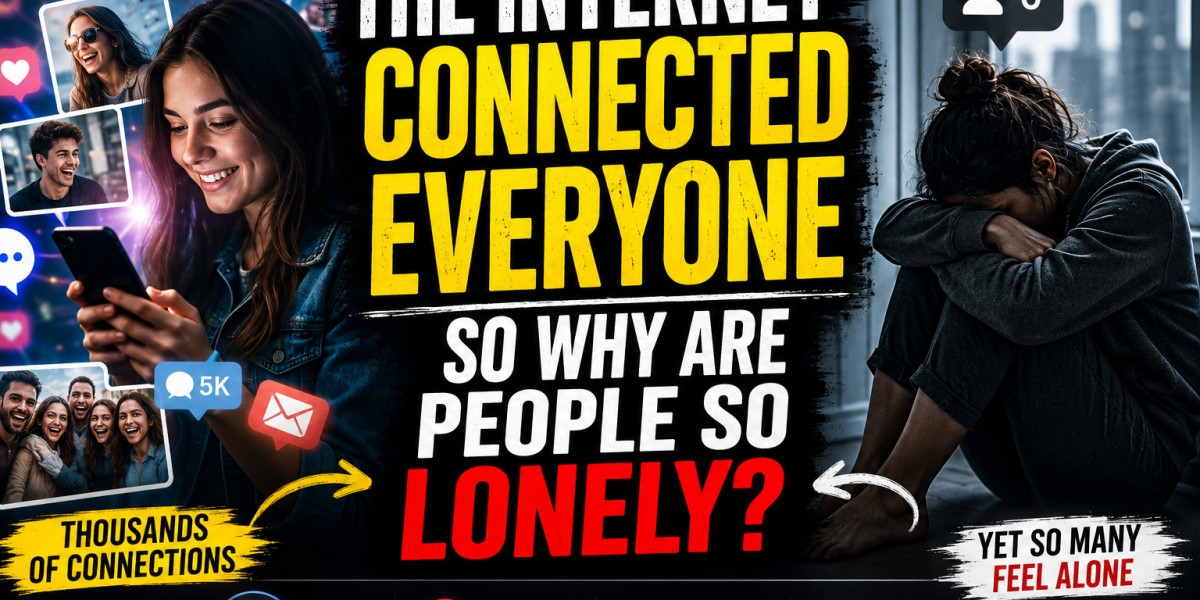
Despite having thousands of online connections, millions of people today say they feel deeply lonely.
In 2026, loneliness has quietly become one of the biggest emotional struggles of modern life.
---
The Strange Contradiction of the Digital Age
The internet solved physical distance — but not emotional distance.
People now spend hours every day:
Scrolling social media
Watching short videos
Replying to notifications
Consuming endless content
Yet many still feel disconnected in real life.
The world became digitally crowded but emotionally distant.
---
Social Media Created the Illusion of Connection
Platforms like Instagram, TikTok, and Facebook allow people to interact constantly.
But online interaction is often shallow.
Likes, emojis, and short comments can never fully replace:
Face-to-face conversations
Genuine emotional support
Physical presence
Deep human relationships
Many people are surrounded by digital attention but still lack meaningful connection.
---
Why Online Life Can Feel Emotionally Empty
1. Constant Comparison
Social media often shows only the best moments of people’s lives.
Luxury vacations, success stories, relationships, expensive lifestyles — everything appears perfect online.
As a result, many people begin comparing their real lives to carefully edited digital versions of others.
This creates:
Insecurity
Anxiety
Low self-esteem
Emotional isolation
---
2. Short Attention Spans Are Changing Relationships
Modern apps are designed to keep attention moving constantly.
People scroll endlessly through:
Videos
Posts
Memes
Notifications
This fast digital environment is affecting how humans communicate.
Conversations are becoming shorter. Patience is decreasing. Deep emotional bonding requires time — something modern internet culture often discourages.
---
3. Digital Communication Cannot Fully Replace Real Presence
Text messages and video calls are useful, but humans naturally crave:
Eye contact
Physical touch
Shared experiences
Emotional energy
A message saying “I’m here for you” feels different from someone physically sitting beside you during difficult moments.
Technology connects devices instantly, but emotional closeness still requires real human interaction.
---
The Rise of Silent Loneliness
One of the most dangerous aspects of modern loneliness is that it often stays hidden.
Many people appear socially active online while secretly struggling emotionally.
Someone may:
Post daily photos
Receive hundreds of likes
Constantly chat online
yet still feel completely alone at night.
This is becoming increasingly common among young people.
---
Why Gen Z Feels This So Strongly
Younger generations grew up fully immersed in digital culture.
Many experienced:
Online friendships before real-world friendships
Social validation through likes and followers
Constant exposure to internet trends
Heavy screen time from childhood
As a result, many young people struggle with:
Social anxiety
Fear of missing out
Emotional exhaustion
Difficulty building deep relationships
Ironically, the generation most connected to technology often reports feeling the most emotionally disconnected.
---
The Mental Health Impact
Loneliness affects far more than emotions.
Studies and experts increasingly link chronic loneliness to:
Depression
Anxiety
Stress
Sleep problems
Burnout
Reduced self-worth
Some researchers even compare severe loneliness to major physical health risks.
Humans are social by nature. Emotional isolation affects both the mind and body.
---
The Internet Is Not Entirely the Problem
Technology itself is not evil.
The internet has also:
Helped people find communities
Connected families across countries
Supported mental health awareness
Allowed people to express themselves
For many isolated individuals, online spaces provide comfort and belonging.
The real issue is balance.
When digital interaction completely replaces real human connection, emotional problems often grow.
---
Why People Are Craving Real Experiences Again
Interestingly, many people are now trying to escape constant digital life.
Trends growing worldwide include:
Digital detoxes
Offline hobbies
Outdoor activities
Smaller social circles
Mindfulness practices
Face-to-face communities
People are beginning to realize that endless online interaction does not always satisfy emotional needs.
---
Can Society Fix the Loneliness Crisis?
Experts believe solving modern loneliness will require both personal and societal changes.
Possible solutions include:
Healthier technology habits
More real-world social spaces
Stronger local communities
Better mental health support
Reducing excessive screen time
Most importantly, people may need to relearn how to build slower, deeper, and more meaningful relationships.
---
Final Thoughts
The internet succeeded in connecting the world technologically.
But emotional connection is far more complicated.
In 2026, millions of people are discovering that constant online interaction does not automatically create genuine human closeness.
Technology can connect screens instantly.
But real human connection still requires presence, attention, vulnerability, and time.
And perhaps that is what many people are truly missing today.