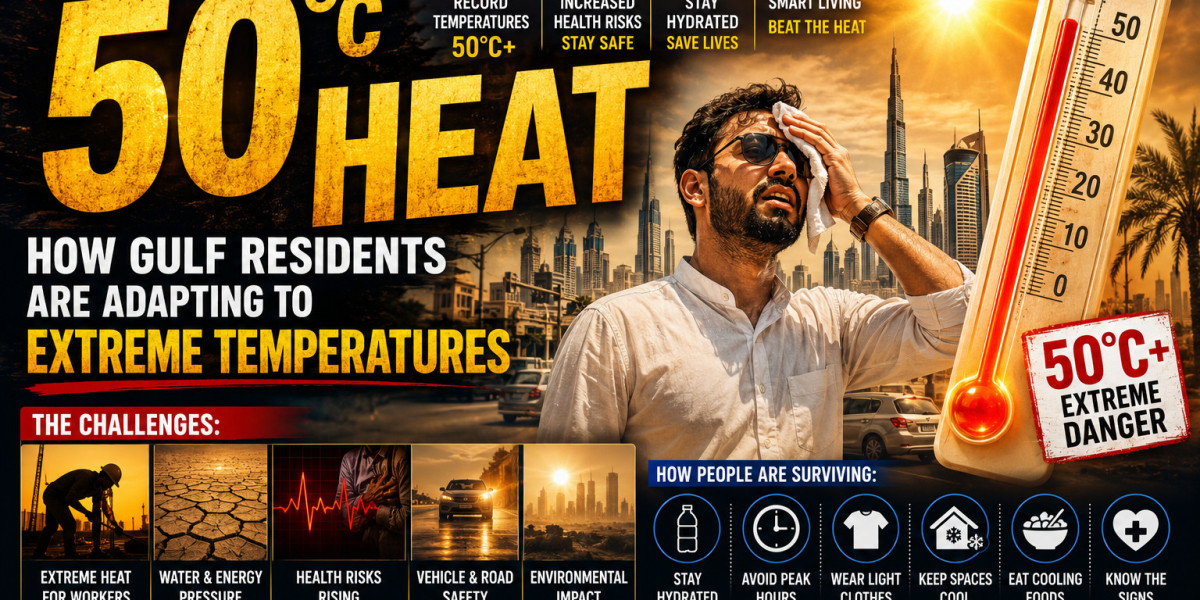

The New Reality of Life in the Gulf
Every summer, millions of people across the Gulf region prepare for intense heat. But in recent years, temperatures have reached levels that many residents describe as unbearable.
In parts of Saudi Arabia, United Arab Emirates, Kuwait, and Qatar, temperatures regularly approach or even exceed 50°C during peak summer months.
Stepping outside for only a few minutes can feel exhausting. Car steering wheels become too hot to touch. Roads shimmer under the sun. Outdoor workers face dangerous conditions every day, while families spend more time indoors trying to escape the heat.
What was once considered “normal summer weather” is now becoming an extreme environmental challenge.
---
Why Gulf Countries Are Becoming Hotter
The Gulf region naturally experiences desert climates, but experts warn that rising global temperatures and rapid urban development are making heat waves more intense.
Several factors contribute to the growing problem:
1. Climate Change
Global warming is increasing average temperatures worldwide, but desert regions are warming even faster.
Heat waves are:
Lasting longer
Becoming more frequent
Reaching higher temperatures
Scientists believe future summers in the Gulf could become even more dangerous if global temperatures continue rising.
---
2. Urban Heat Effect
Modern cities filled with:
Concrete
Asphalt roads
Glass skyscrapers
Heavy traffic
trap heat and make urban areas feel significantly hotter than surrounding deserts.
Large cities like Riyadh, Dubai, and Kuwait City often experience intense nighttime heat because buildings and roads continue releasing stored heat after sunset.
---
3. Humidity Makes It Worse
In coastal Gulf cities, high humidity creates dangerous conditions.
When humidity rises:
Sweat evaporates slower
The body cools less effectively
Heat stress increases rapidly
This combination of extreme temperature and humidity can become life-threatening.
---
The Hidden Health Risks of Extreme Heat
Many people underestimate how dangerous prolonged heat exposure can be.
Heat Exhaustion
Common symptoms include:
Dizziness
Weakness
Heavy sweating
Nausea
Headaches
Without proper treatment, heat exhaustion can quickly become severe.
---
Heat Stroke
Heat stroke is a medical emergency.
Symptoms may include:
Confusion
Fainting
High body temperature
Rapid heartbeat
Loss of consciousness
In extreme cases, it can become fatal.
---
Mental and Emotional Stress
Extreme heat also affects mental health.
Many residents report:
Fatigue
Irritability
Sleep problems
Reduced productivity
Stress from staying indoors for long periods
Even daily routines become harder during intense summer months.
---
Outdoor Workers Face the Biggest Danger
Construction workers, delivery drivers, cleaners, and laborers are among the most vulnerable groups.
Working under direct sunlight in 45–50°C temperatures can become extremely dangerous.
Many Gulf countries now implement:
Midday work bans
Mandatory water breaks
Heat safety regulations
to protect workers during peak summer hours.
However, the physical and emotional challenges remain enormous.
---
How Gulf Residents Are Adapting
Despite the harsh conditions, people across the Gulf are finding creative ways to survive and adapt.
---
1. Changing Daily Schedules
Many people avoid outdoor activities during peak afternoon heat.
Instead:
Shopping happens at night
Exercise shifts to early mornings
Outdoor gatherings happen after sunset
In many Gulf cities, nightlife becomes much more active during summer because evenings are significantly cooler.
---
2. Heavy Dependence on Air Conditioning
Air conditioning has become essential for daily life.
Homes, offices, shopping malls, cars, and even bus stops rely heavily on cooling systems.
In some cities, moving between air-conditioned spaces becomes part of everyday survival.
---
3. Smarter Clothing Choices
Loose, lightweight clothing helps reduce heat stress.
Many residents wear:
Breathable fabrics
Light colors
Sun-protective head coverings
Traditional Gulf clothing is actually designed to handle desert climates effectively.
---
4. Hydration Is a Daily Priority
Doctors constantly warn residents to drink more water during summer.
People now carry:
Water bottles
Electrolyte drinks
Cooling beverages
everywhere they go.
Staying hydrated can significantly reduce the risk of heat-related illnesses.
---
5. Technology Is Helping
Modern technology is becoming a major tool in heat adaptation.
Smart solutions include:
AI-powered cooling systems
Heat-monitoring apps
Smart city infrastructure
Energy-efficient buildings
Gulf countries are investing heavily in futuristic urban projects designed for extreme climates.
---
The Economic Impact of Extreme Heat
Extreme temperatures affect more than health.
They also impact:
Electricity usage
Water demand
Construction projects
Transportation systems
Outdoor businesses
Energy consumption spikes massively during summer because millions of air conditioners run continuously.
This increases pressure on national power grids.
---
Could Gulf Summers Become Unlivable?
Some climate experts warn that parts of the Gulf could face severe habitability challenges in the future if temperatures continue rising.
However, Gulf countries are also among the world leaders in:
Smart city development
Renewable energy
Climate adaptation technology
Projects linked to future urban planning aim to make cities more sustainable and heat-resistant.
---
Tips for Surviving Extreme Gulf Heat
Stay Hydrated
Drink water regularly, even if you do not feel thirsty.
Avoid Peak Heat Hours
Try to stay indoors between 12 PM and 4 PM.
Wear Lightweight Clothing
Choose breathable fabrics and light colors.
Never Leave Children or Pets in Cars
Car temperatures can become deadly within minutes.
Watch for Heat Stroke Symptoms
Seek medical help immediately if someone shows signs of confusion or collapse.
Reduce Outdoor Physical Activity
Especially during peak afternoon temperatures.
---
The Future of Life in the Gulf
Extreme heat is no longer just a seasonal inconvenience — it is becoming one of the defining challenges of life in the Gulf region.
Yet despite the difficulties, Gulf residents continue adapting through technology, lifestyle changes, and innovation.
The coming years may transform how cities are designed, how people work, and how everyday life functions in some of the hottest places on Earth.
One thing is certain:
Life in 50°C heat is changing the Gulf forever.