
Human attention has become one of the most valuable resources on Earth.
In the modern digital world, companies are no longer competing only for money.
They are competing for:
Attention
Focus
Time
Emotions
Human behavior
Every notification, short video, headline, advertisement, and viral trend is designed for one purpose:
To keep people engaged for as long as possible.
This invisible battle has created what experts increasingly call:
The Attention Economy.
And many people are losing control without even realizing it.
What Is the Attention Economy?
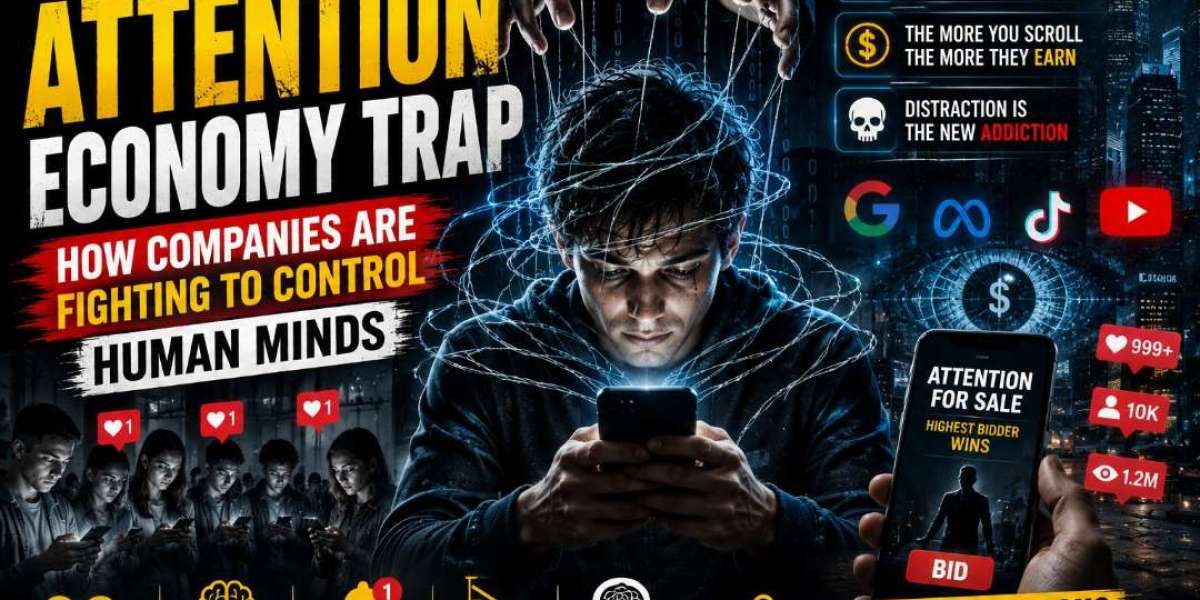
The attention economy is a system where human attention is treated like a product.
Modern platforms profit when people:
Scroll longer
Watch more content
Click more ads
Stay online
Engage emotionally
The longer users remain digitally active, the more money companies generate.
This means billions of dollars are invested into understanding:
Human psychology
Addiction patterns
Emotional triggers
Behavioral manipulation
Attention is no longer accidental.
It is engineered.
Why Human Brains Are Struggling
Human brains were never designed for nonstop digital stimulation.
Today people consume:
Endless short videos
Constant notifications
Breaking news
Viral trends
Social comparison
Algorithmic entertainment
This overload affects focus and emotional stability.
Many people now struggle with:
Short attention spans
Mental fatigue
Anxiety
Constant distraction
Reduced patience
Difficulty concentrating
Modern technology is changing how humans think, react, and process information.
The Rise of Dopamine Addiction
Social media platforms are intentionally designed to trigger dopamine responses.
Every:
Like
Comment
Message
Notification
Viral post
Creates small bursts of psychological reward.
Over time, this can create addictive behavioral loops.
People begin checking phones automatically even without purpose.
Silence starts feeling uncomfortable.
Stillness becomes rare.
Why Short-Form Content Is Rewiring Minds
Modern algorithms prioritize fast entertainment.
As a result, many people now consume information in:
Seconds
Quick clips
Headlines
Fragments
This constant rapid stimulation weakens deep focus.
People increasingly struggle to:
Read books
Study consistently
Focus deeply
Think critically
Stay mentally present
The brain slowly adapts to constant stimulation and instant reward.
Emotional Manipulation Online
Attention-driven platforms often prioritize emotional reactions because strong emotions increase engagement.
Algorithms amplify:
Fear
Anger
Controversy
Outrage
Anxiety
Drama
Why?
Because emotional content spreads faster.
This can create psychological exhaustion over time.
People become trapped in cycles of:
Doom scrolling
Emotional overstimulation
Constant stress
Digital comparison
Social Media Is Changing Human Identity
Online culture increasingly encourages people to build identities around:
Validation
Appearance
Attention
Followers
Popularity
Many begin measuring self-worth through:
Likes
Views
Comments
Public approval
This creates emotional instability because online attention is temporary and unpredictable.
The Productivity Crisis
One major consequence of the attention economy is declining productivity.
Many people struggle to complete tasks without interruption because digital platforms constantly compete for focus.
Average users check their phones dozens or even hundreds of times daily.
As attention fragments:
Creativity declines
Focus weakens
Deep thinking disappears
Mental clarity suffers
The modern world rewards distraction while demanding productivity at the same time.
Children and the Future Generation
Perhaps the biggest concern involves younger generations.
Children are growing up surrounded by:
Algorithms
Screens
Short-form entertainment
Instant stimulation
This may affect:
Learning ability
Emotional regulation
Social development
Patience
Attention control
Many experts fear future generations may struggle with long-term focus more than any generation before them.
Can People Escape the Attention Trap?
Yes.
But it requires conscious discipline.
Important steps include:
Reducing screen time
Turning off unnecessary notifications
Spending time offline
Reading deeply
Practicing focus
Limiting social media use
Creating intentional routines
Attention is a form of power.
People who control their attention often control their future more effectively.
Why Attention Matters More Than Ever
In the digital age, focus has become rare.
And rare things become valuable.
Companies understand this deeply.
That is why billions are spent trying to capture human attention every second.
But people who reclaim their focus gain:
Better mental clarity
Higher productivity
Emotional peace
Stronger discipline
Improved creativity
Final Thoughts
The attention economy is quietly reshaping modern society.
Technology itself is not the enemy.
But systems designed to endlessly capture human attention can slowly weaken:
Focus
Emotional health
Critical thinking
Human connection
Modern people must now fight for something previous generations rarely had to protect:
Their own minds.
Because in the digital era, attention may become one of the most important forms of freedom.
Published by Arvanz.com
Exploring modern society, digital culture, psychology, technology, and the hidden realities shaping our generation.