
Scroll through social media for a few minutes and the world appears perfect.
People are traveling.
Smiling couples share romantic moments.
Luxury lifestyles dominate timelines.
Success stories flood every platform.
Everyone seems productive, attractive, wealthy, and happy.
But behind many screens, a very different reality exists.
Millions of people today are silently struggling with:
Anxiety
Emotional exhaustion
Loneliness
Depression
Financial pressure
Identity confusion
Burnout
Modern society has created something dangerous:
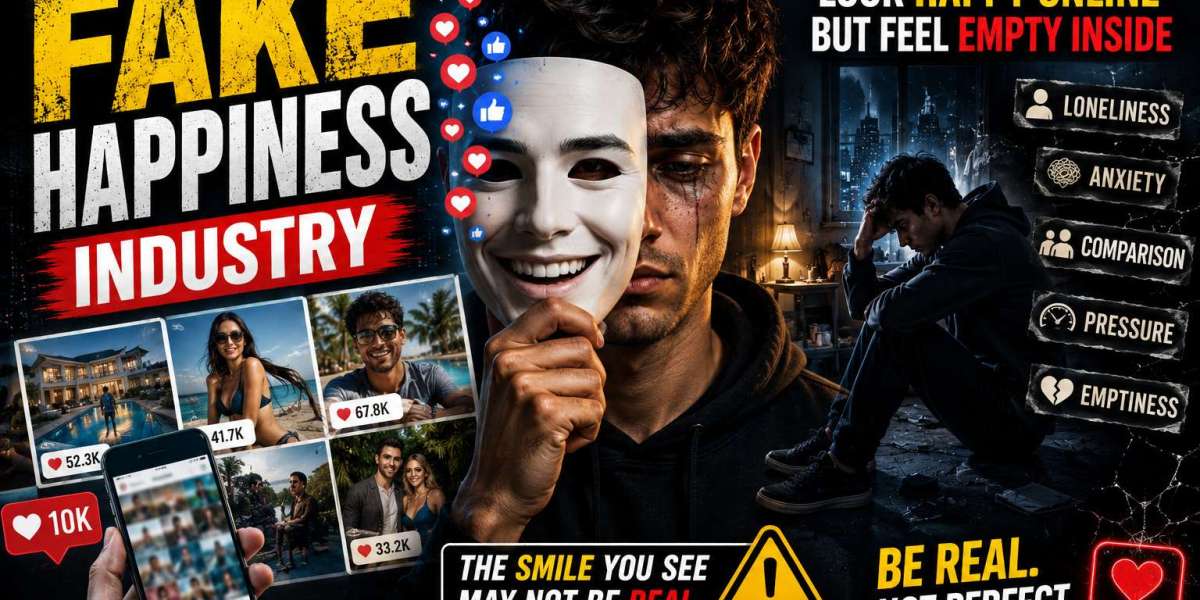
A culture where looking happy has become more important than actually being happy.
The Rise of the Fake Happiness Industry
In the digital age, happiness has become performative.
Social media platforms reward:
Attention
Appearance
Validation
Popularity
Lifestyle presentation
As a result, many people feel pressured to constantly display:
Success
Confidence
Beauty
Wealth
Excitement
Even when internally struggling.
This creates what many psychologists call emotional disconnection: A gap between public image and private reality.
Why So Many People Fake Happiness Online
The reasons are deeply human.
People often hide pain because they fear:
Judgment
Rejection
Weakness
Social embarrassment
Being left behind
Instead of expressing vulnerability, many create idealized online versions of themselves.
They post:
Highlight moments
Filtered photos
Luxury experiences
Positive captions
But social media rarely shows:
Anxiety attacks
Financial struggles
Loneliness
Family problems
Emotional breakdowns
Mental exhaustion
The internet became a stage where people perform happiness while silently battling emotional pain.
Validation Has Become Addictive
Modern platforms are designed around attention.
Every:
Like
Comment
View
Share
Notification
Triggers dopamine responses in the brain.
Over time, many people become psychologically dependent on online validation.
Their self-worth slowly becomes connected to:
Engagement
Popularity
Appearance
Public approval
When validation disappears, emotional emptiness often grows stronger.
Comparison Culture Is Destroying Inner Peace
One of the most damaging effects of social media is constant comparison.
Every day, people compare their real lives to curated online fantasies.
They see:
Perfect bodies
Expensive lifestyles
Relationship goals
Career achievements
Luxury vacations
Eventually many begin asking:
Why am I behind?
Why is my life harder?
Why does everyone else seem happier?
But comparison is dangerous because people compare:
Their reality
to
Other people’s edited highlights.
This creates insecurity, frustration, and emotional dissatisfaction.
Consumerism and the Illusion of Happiness
Modern society constantly promotes the idea that happiness can be purchased.
Advertisements suggest:
More money equals happiness
Luxury equals success
Expensive lifestyles equal fulfillment
As a result, many chase:
Status
Appearance
Possessions
Online image
But temporary pleasure is not the same as deep fulfillment.
Many people achieve external success while still feeling emotionally empty internally.
Why Emotional Emptiness Is Increasing
Despite modern convenience, emotional fulfillment is declining for many people.
Reasons include:
Lack of meaningful connection
Digital addiction
Isolation
Burnout
Constant stimulation
Reduced real-life interaction
Identity pressure
Modern people consume more entertainment than ever, yet many feel less emotionally satisfied.
Because distraction can temporarily numb pain, but it rarely heals it.
The Hidden Mental Health Crisis
Behind fake online happiness, mental health struggles continue rising globally.
Millions silently battle:
Depression
Anxiety
Emotional exhaustion
Loneliness
Self-doubt
Yet many continue pretending everything is fine because society rewards appearances more than honesty.
This creates emotional isolation even in highly connected environments.
Real Happiness Cannot Be Manufactured Online
True happiness is rarely loud.
It usually comes from:
Meaningful relationships
Emotional peace
Purpose
Health
Personal growth
Stability
Inner fulfillment
Not from:
Viral attention
Expensive lifestyles
Online popularity
External validation
But modern digital culture often reverses these priorities.
How People Can Escape the Fake Happiness Trap
Breaking free requires awareness.
Important steps include:
Reducing unhealthy social comparison
Spending more time offline
Building real relationships
Protecting mental health
Focusing on purpose over appearance
Limiting validation addiction
Creating authentic self-worth
People do not need perfect lives.
They need emotionally honest lives.
Final Thoughts
The fake happiness industry has become one of the defining problems of the modern digital era.
Millions of people look happy online while secretly feeling emotionally exhausted inside.
Social media has made it easier to display happiness.
But much harder to feel genuine fulfillment.
The solution is not abandoning technology completely.
It is learning to separate:
Real happiness
from
Performed happiness.
Because true fulfillment cannot be measured by followers, likes, or online attention.
It is built quietly through purpose, connection, honesty, and inner peace.
Published by Arvanz.com
Exploring modern society, digital culture, emotional well-being, and the hidden realities shaping our generation.