
Human beings have never been more connected technologically.
We can message anyone instantly.
Video call across continents.
Share our lives publicly in seconds.
Access endless entertainment 24/7.
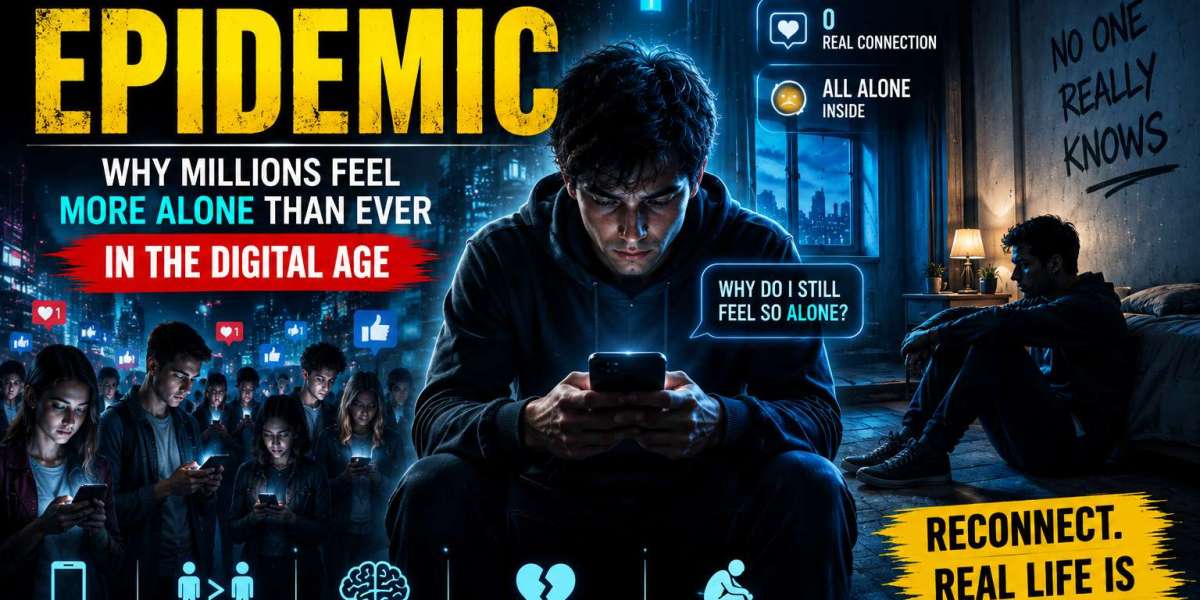
Yet despite living in the most digitally connected era in history, millions of people feel emotionally disconnected, isolated, and deeply lonely.
This is the modern contradiction of the digital age:
People are surrounded by online interaction, but starving for genuine human connection.
And for many, loneliness has quietly become one of the biggest emotional crises of modern society.
The Rise of Modern Loneliness
Loneliness is no longer limited to elderly people or those living alone.
Today, people of all ages experience it:
Teenagers
Students
Workers
Professionals
Parents
Migrants
Entrepreneurs
Many people smile publicly while silently feeling emotionally exhausted internally.
Modern loneliness often hides behind:
Busy schedules
Social media activity
Career ambition
Constant entertainment
But distraction does not always remove emotional emptiness.
Why the Digital Age Is Making Loneliness Worse
Technology was designed to connect people.
But in many ways, it has transformed human relationships into something faster, shorter, and less meaningful.
People now spend hours:
Scrolling endlessly
Watching short videos
Comparing lifestyles
Chasing online validation
Meanwhile, real-life conversations, deep friendships, and emotional support are slowly declining.
Many people communicate constantly online while rarely feeling truly understood.
Social Media and the Illusion of Connection
Social media creates the appearance of social fulfillment.
A person may have:
Thousands of followers
Constant notifications
Online attention
Viral content
Yet still feel emotionally alone.
Why?
Because online interaction often lacks:
Real vulnerability
Genuine emotional presence
Deep trust
Meaningful support
Likes and views can temporarily stimulate the brain, but they rarely replace authentic human connection.
Comparison Culture Creates Emotional Distance
Social media also intensifies comparison.
Every day, people see:
Luxury lifestyles
Perfect relationships
Career success
Fitness transformations
Travel experiences
This can create feelings of:
Inadequacy
Isolation
Failure
Emotional disconnection
Many begin believing everyone else is happier, more successful, and more fulfilled.
But most people are only sharing highlights, not reality.
Modern Life Is Becoming Emotionally Exhausting
Today’s world moves fast.
People are expected to:
Work harder
Stay productive
Keep improving
Maintain appearances
Remain available constantly
This nonstop pressure leaves many emotionally drained.
Even when surrounded by people, individuals may feel mentally disconnected because they rarely have time for:
Deep conversation
Reflection
Emotional rest
Meaningful relationships
The Decline of Real Human Interaction
In previous generations:
Families spent more time together
Communities were stronger
Face-to-face interaction was more common
Now many relationships are reduced to:
Quick messages
Reactions
Emojis
Short attention spans
Digital convenience has improved communication speed, but often weakened emotional depth.
Loneliness and Mental Health
Long-term loneliness can seriously affect mental health.
It may contribute to:
Anxiety
Depression
Low self-worth
Burnout
Emotional numbness
Sleep problems
Some experts even compare chronic loneliness to a public health crisis.
Yet many people suffer silently because loneliness is often misunderstood as weakness.
Why So Many People Hide Their Loneliness
Many people fear admitting emotional isolation.
They worry about:
Judgment
Rejection
Appearing weak
Social embarrassment
So instead of opening up, many distract themselves through:
Endless scrolling
Gaming
Entertainment
Overworking
Online validation
But temporary distraction rarely heals emotional emptiness.
Can Modern People Rebuild Connection?
Yes.
But it requires intentional effort.
Important steps include:
Spending more time offline
Building meaningful friendships
Having deeper conversations
Reducing unhealthy social comparison
Prioritizing mental health
Creating real-life experiences
Limiting digital overload
Human beings still need:
Presence
Understanding
Trust
Emotional safety
Technology cannot fully replace those needs.
The Importance of Real Relationships
Real connection is not measured by:
Followers
Likes
Views
Viral attention
It is measured by:
Trust
Emotional support
Shared experiences
Honest conversation
Genuine care
Even a few meaningful relationships can dramatically improve emotional well-being.
Final Thoughts
The digital age has changed humanity forever.
It has created incredible convenience, opportunity, and access.
But it has also created a silent emotional crisis affecting millions worldwide.
People today are more connected online, yet often more disconnected emotionally.
The loneliness epidemic is not simply about being alone.
It is about feeling unseen, unheard, and emotionally distant in a world constantly demanding attention.
Perhaps the real challenge of modern life is not learning how to connect digitally.
But remembering how to connect humanly.
Published by Arvanz.com
Exploring modern society, emotional well-being, global challenges, and the realities shaping our generation.