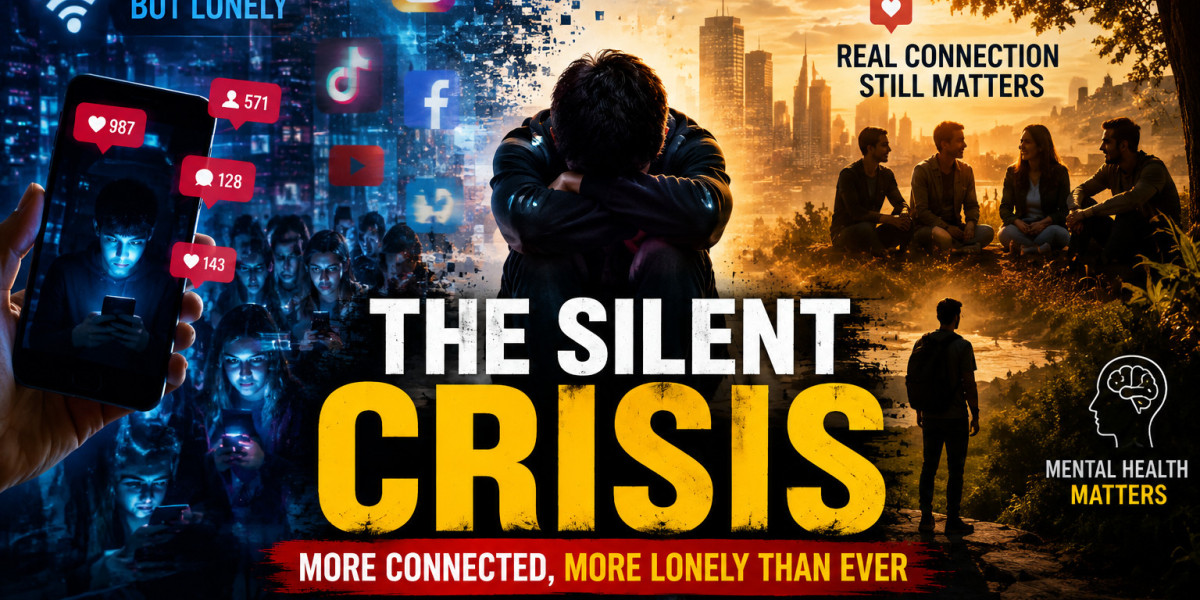

The Dark Reality Behind Social Media, AI, Digital Life, and Modern Human Isolation
In 2026, humanity is more connected than at any moment in history.
People can instantly message someone across the world, join live video calls within seconds, share moments with millions online, and use Artificial Intelligence to solve problems faster than ever before.
But despite all this connection, something strange is happening.
Millions of people today feel:
Emotionally exhausted
Socially disconnected
Mentally overwhelmed
Lonely even in crowded spaces
This silent crisis is becoming one of the most serious global discussions on the internet.
The modern digital world promised unlimited connection, yet many people now feel more isolated than ever.
This is not just a personal issue anymore. It is becoming a worldwide social transformation.
---
? Social Media Changed Human Behavior Forever
Platforms like:
TikTok
YouTube
completely transformed modern communication.
People now spend hours every day:
Scrolling endlessly
Watching short videos
Comparing lifestyles
Following trends
Chasing attention online
At first, social media felt exciting and revolutionary.
But over time, experts and users worldwide started noticing serious effects:
Shorter attention spans
Reduced real-life communication
Increased emotional pressure
Addiction to validation
Constant comparison culture
Many people are no longer enjoying life naturally.
Instead, they feel pressure to make life “look perfect” online.
---
? AI Is Helping Humanity — But Also Changing Human Relationships
Artificial Intelligence has become part of everyday life.
AI now helps with:
Writing
Education
Business
Translation
Customer support
Video creation
Search engines
Personal productivity
Companies like OpenAI, Google, and Microsoft are rapidly developing systems that make life easier.
But many people are asking an important question:
? “If technology becomes smarter, will humans become more disconnected emotionally?”
As digital systems grow stronger, many people spend less time:
Meeting friends physically
Talking deeply with family
Building real-world relationships
Enjoying offline experiences
Technology is improving communication speed, but not always emotional connection.
---
? The Rise of the “Always Online” Lifestyle
In 2026, many people wake up and immediately check:
Notifications
News feeds
Social media apps
Messages
Viral trends
The internet never sleeps anymore.
This creates a lifestyle where the brain rarely gets real rest.
Many users now experience:
Mental burnout
Information overload
Sleep problems
Stress from constant updates
Fear of missing out (FOMO)
The pressure to stay relevant online has become emotionally exhausting for millions of people worldwide.
---
? Why Digital Success Now Controls Social Status
Another major reason this topic is going viral is because modern society increasingly measures success through digital visibility.
Today people are often judged by:
Followers
Views
Likes
Viral popularity
Online income
Social media appearance
This creates unhealthy comparison culture.
Someone scrolling online may feel:
Less successful
Less attractive
Less productive
Less important
even when real life may be completely different.
The internet shows highlights, not reality.
---
? Why This Topic Is Becoming a Global Discussion
Searches related to:
“digital burnout”
“social media anxiety”
“internet loneliness”
“mental health and technology”
“AI and human connection”
are increasing globally.
People are beginning to realize that modern technology brings both:
Incredible opportunities
Serious emotional challenges
This conversation is now happening worldwide because almost everyone is affected by digital life in some way.
---
⚠️ The Dangerous Side of Endless Viral Content
Short-form content changed how people consume information.
Modern users often switch attention every few seconds:
One video
One meme
One news update
Another trend
This constant stimulation affects:
Focus
Patience
Deep thinking
Productivity
Experts increasingly warn that endless scrolling may reduce the brain’s ability to stay focused for long periods.
The internet rewards speed, but human psychology still needs balance.
---
? The New Movement: Returning to Real Life
Because of this growing pressure, many people are now trying to:
Spend less time online
Build real-life friendships
Travel more
Exercise regularly
Focus on personal growth
Create healthier routines
People are starting to understand something important:
? Technology should improve life, not control it.
The healthiest future may not be “anti-technology.”
Instead, it may be balanced technology use.
---
? Why This Blog Topic Can Go Viral
This topic has massive viral potential because:
Almost everyone relates to it
It mixes emotion + technology
It connects with Gen Z and young adults
It creates discussion and debate
It performs strongly on social media and Google
People share content when it feels personal and emotionally real.
And this issue affects millions globally every single day.
---
? Final Thoughts
The digital world of 2026 is powerful, exciting, and full of opportunity.
But behind the screens, notifications, and viral trends, humanity is facing a silent emotional challenge.
Technology connected the world digitally, but many people are still searching for deeper human connection emotionally.
The future will not depend only on smarter AI or faster internet.
It will also depend on whether humanity can protect:
Real communication
Real friendships
Real emotions
Real balance
in an increasingly digital world.