
Now, businesses around the world are facing a major question:
Should employees continue working remotely, return to the office, or adopt a hybrid model?
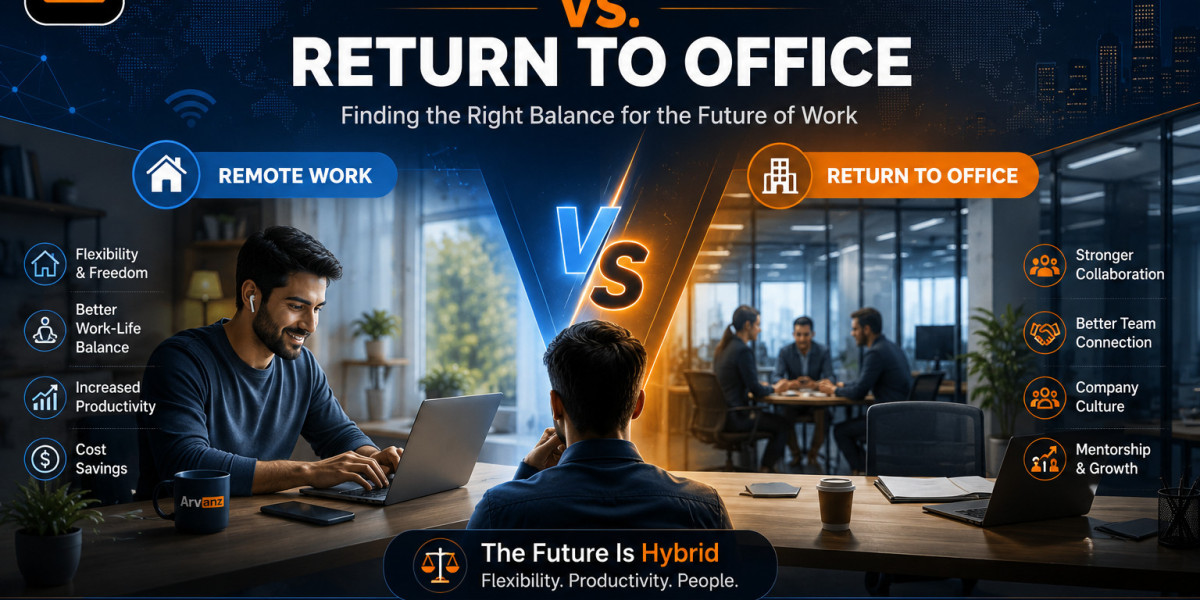
The debate between remote work and return-to-office policies has become one of the biggest discussions in the modern professional world. Both sides offer unique advantages and challenges, and the future of work may depend on finding the right balance.
The Rise of Remote Work
Remote work existed long before the pandemic, but it was often limited to freelancers, tech companies, and digital entrepreneurs. Today, it has become a mainstream work model across industries.
Advancements in technology made this possible through:
Video conferencing platforms
Cloud-based collaboration tools
High-speed internet
Project management software
Digital communication systems
Many companies discovered that employees could remain productive without physically sitting in an office.
For workers, this opened a completely new lifestyle.
Benefits of Remote Work
Better Work-Life Balance
One of the biggest advantages of remote work is flexibility. Employees can spend more time with family, avoid long commutes, and create a healthier daily routine.
Many workers report feeling less stressed and more in control of their time.
Increased Productivity
Contrary to old assumptions, many companies found that productivity actually improved during remote work periods.
Without office distractions and unnecessary meetings, employees often focus better and complete tasks more efficiently.
Global Job Opportunities
Remote work removes geographical barriers. A talented designer in Bangladesh can work for a company in Canada. A developer in Saudi Arabia can collaborate with a startup in Europe.
This global access benefits both employers and workers.
Cost Savings
Employees save money on:
Transportation
Fuel
Office clothing
Daily meals
Businesses also reduce expenses related to office rent, utilities, and maintenance.
Challenges of Remote Work
Isolation and Loneliness
Working from home can become emotionally difficult over time. Some employees miss face-to-face interaction, team energy, and social connections.
Communication Problems
Digital communication is helpful, but it cannot fully replace in-person collaboration. Misunderstandings may happen more frequently online.
Blurred Boundaries
Remote workers sometimes struggle to separate personal life from work life. This can lead to burnout and mental exhaustion.
Security Risks
Remote environments can create cybersecurity challenges, especially when employees use personal devices or unsecured internet connections.
Why Some Companies Want Employees Back
Many organizations believe office environments still offer important advantages.
Stronger Team Collaboration
In-person interaction often leads to faster brainstorming, stronger teamwork, and better relationship building.
Company Culture
Leaders worry that fully remote systems weaken company identity and employee engagement over time.
Easier Supervision and Training
Managing teams, onboarding new employees, and mentoring junior staff can sometimes be more effective in physical office settings.
Improved Creativity
Some businesses believe spontaneous office conversations and face-to-face discussions lead to more innovation.
The Hybrid Work Model
For many companies, the solution is neither fully remote nor fully office-based.
Instead, hybrid work has emerged as the preferred middle ground.
In a hybrid model:
Employees work remotely part of the week
They attend the office for meetings, collaboration, or important tasks
This approach combines flexibility with human connection.
Many experts believe hybrid work will become the standard model for the future.
Employee Expectations Are Changing
Today’s workforce values flexibility more than ever before.
Many professionals now consider remote work options when choosing jobs. Companies that refuse flexibility may struggle to attract and retain talented workers.
Younger generations especially prioritize:
Freedom
Work-life balance
Mental well-being
Flexible schedules
The definition of a “good job” is evolving rapidly.
Technology Is Shaping the Future
Artificial intelligence, virtual reality, and advanced collaboration tools are transforming how people work.
In the near future, remote work may become even more immersive and efficient through:
AI-powered assistants
Virtual offices
Smart automation
Real-time language translation
Digital collaboration environments
Technology is reducing the gap between physical and virtual workplaces every year.
Which Is Better?
There is no universal answer.
Some people thrive in remote environments. Others perform better in offices. The best solution often depends on:
Job type
Personality
Industry
Company goals
Team structure
The future of work is likely to remain flexible rather than one-size-fits-all.
Final Thoughts
The conversation around remote work versus return to office is not just about location. It is about productivity, trust, lifestyle, technology, and the future of human work itself.
Businesses that adapt intelligently will have a major advantage in attracting talent and staying competitive.
For workers, the modern world offers more freedom and opportunity than ever before.
The workplace is evolving, and the future may belong to those who can balance flexibility, technology, and human connection most effectively.
Published on Arvanz.com
Exploring the future of technology, work, privacy, and digital innovation.